
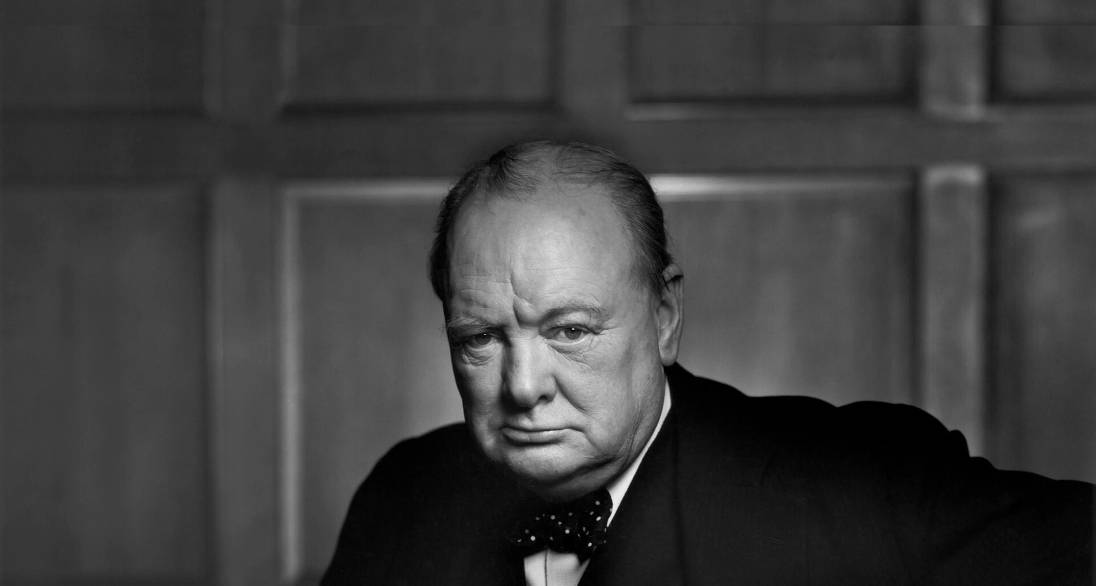
Winston Churchill, still remembered
And why he must not be forgotten
Elementary / preliminary level English
Difficult words: click words in maroon to see what they mean
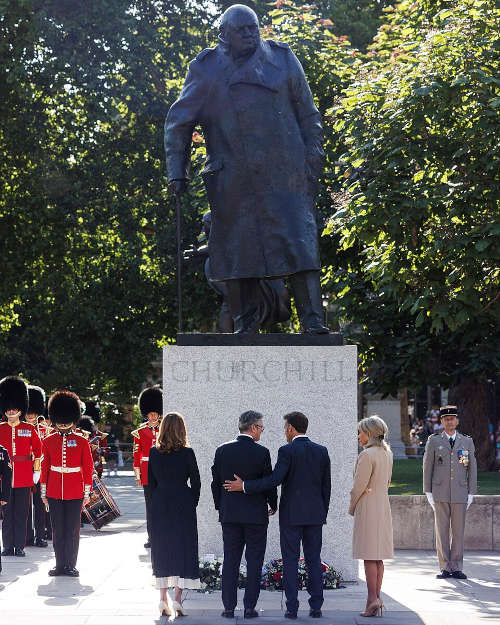
Churchill's statue on Parliament Square, London
Churchill died over 60 years ago, but he is still very famous today.
Who is the most important person of the past 100 years? Many people think the answer is Sir Winston Churchill. He was a great leader. He was the Prime Minister of the United Kingdom during a dark and difficult time. In 1940, the world was at war, but Churchill was the man of the moment. Without his good choices and brave words, the world might be very different today.
Early life
Winston Churchill was born in 1874. He was descended from the Dukes of Marlborough, and spent his childhood in a very large house near Oxford, called Blenheim Palace. His father was a politician, and his mother was American. As a young man, Churchill loved adventure. He joined the army and went to many different countries. He also worked as a reporter, writing long stories for British newspapers. In the year 1900, he became a politician.
For many years, he did different jobs for the British government. However, his most important moment came in May 1940. Europe was at war, and the United Kingdom had to have, required a new leader. Churchill became the Prime Minister. At that time, the Nazis were winning the war, and people were afraid of the enemy.
Powerful words in a dark time
Churchill was famous because he made great speaking in public. He refused to stop fighting the enemy. He gave people optimism when many wanted to stop trying. He used simple but very strong words on the radio so everyone could understand him. In 1940, when Germany wanted to attack Britain, Churchill told Parliament:
"We shall fight on the beaches, we shall fight on the landing grounds, we shall fight in the fields and in the streets; we shall fight in the hills; we shall never stop fighting."
He also knew that getting a good result from your hard work takes time and hard work. He often said kind words to make people feel brave. For example, he said these famous words:
"Success is not final, opposite of success is not fatal: it is the courage to continue that is important."
With his help, the Britain, the USA, France etc. won the war in 1945. Churchill lost the election later that year, but he became Prime Minister again in 1951. He was also a very good writer. He won the Nobel Prize for Literature in 1953. He died in 1965 at the age of ninety.
Why he matters today
So why is Winston Churchill still important today? Firstly, he teaches us that words have a lot of strength, control. His speeches show that a good leader can bring people together when times are bad.
Secondly, he shows us what real courage means. Today, our world still has many difficult problems, like wars and terrorism. Churchill's life shows us that we must protect liberty and democracy, even when things are very hard. He is a great example of how one person can help to change history.
Discover grammar in a new light
"A breath of fresh air" - IATEFL Voices
Print & ebook from Amazon,
Print book from Barnes & Noble, Waterstones & other good bookshops
grew up: spent his childhood - needed: had to have, required - speeches: speaking in public - hope: optimism - give up: stop trying - surrender: stop fighting - success: getting a good result from your hard work - failure: opposite of success - counts: is important - Allies: Britain, the USA, France etc. - power: strength, control - freedom: liberty
Copyright
notice.
This resource is © copyright Linguapress
This text may not be
reproduced on other websites
nor in printed form without written permission from the publishers.
Reproduction is authorised exclusively for personal use by students, or
for use by teachers with their classes.
Student worksheet
Words and
spelling.
Put the missing words back into this extract from the
article. In each case, the first one or two letters are given, to help
you. Boxes will grow, to accept longer words.
Winston Churchill was born in 1874. He was de from the Dukes of Marl, and gr up in a very large h near Oxford, called Blenheim Palace. His father was a po, and his mother was A. As a young man, Churchill loved ad. He joined the army and went to many different co. He also worked as a reporter, wr long stories for British newspapers. In the year 1900, he be a politician.
For many years, he did different jobs for the British go. Ho, his most important moment c in May 1940. Europe was at war, and the U Kingdom needed a new l. Churchill became the P Minister. At that time, the Nazis were w the war, and people were af of the enemy.
Tenses: past simple or past
progressive?
Choose
the correct past tense form of the verb in brackets in each of these
five sentences based on the article.
- Winston Churchill [ was born / was being born ] in England in 1874.
- In May 1940, a major war [ happened / was happening ] across Europe.
- At that time the Nazis [ won / were winning ] the war, and people were afraid of the enemy.
- Churchill [ gave / was giving ] the British people hope because he talked so well on the radio.
- With the help of the Allies, Britain finally [ won / was winning ] the war in 1945.
For teachers - Lesson plan
First:
ask students to tell you anything they know about Churchill, either in
English or in their own language. They may not know anything.... which
gives you an excellent reason to use this text!
Grammar:
The text illustrates several grammar points:
Simple modal verbs: might, could, can shall and must. Pay particular attention to the use of shall, in Churchill's famous quote: We shall..... Shall is not normally used in today's English: if a modal of futurity is required, is is usually will. However this shall is more than just a modal of futurity; it is a modal of future determination. We shall means We are absolutely going to....
Adverbials at the start of sentences.. A number of sentences start with adverbs or adverb phrases. Placing them at the start of the sentence gives them specific importance, notably in the structuring of the narrative. Note In 1940 and Firstly and secondly.
Past narrative tenses: simple or progressive aspects
About Linguapress. Founded as a print media publisher in 1980, Linguapress is today dedicated to providing free high-quality EFL / ESL resources online for all, anywhere in the world. You are free to use our online resources, within the limits of our copyright policy (basically, don't copy our resources onto any other publicly-accessible platform or website). To help keep these resources free for anyone to use, you can support linguapress.com by sharing with friends and colleagues, or liking us on social media, or buying our acclaimed books for yourself or your school.
Teachers.
Spelling :
Pay particular attention to four different ways of spelling the word
ending pronounced [ə] used in the exercise. In American English, some
British English words that end in -re,
such as the theatre
or the centre,
end in -er.
Talking: You may like to talk about Churchill with your students, either in English or in their own language.
© linguapress.com
 Copyright
information.
Copyright
information.