WITH AUDIO ►: Click to open/close audio player
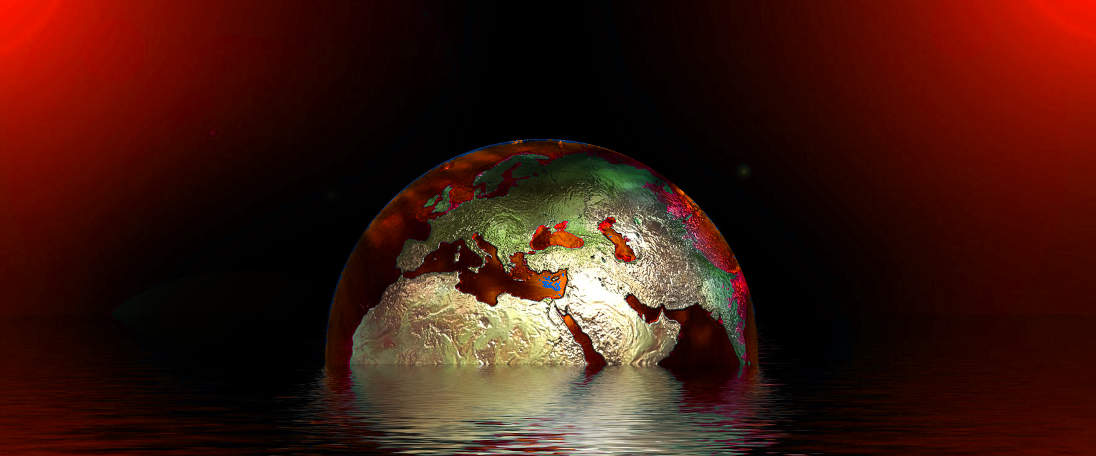
The world is getting hotter. We have to take drastic measures to combat global warming; but can we do this quickly enough, or are we going towards a climate catastrophe?
There are still some people who say that climate change is not real ! Others say that it is real, but we cannot do anything to stop it, so we need not try. A few people even say that climate change is not caused by human beings. But most people now understand that our world is getting hotter, and we have to do something about it. We only have one Earth, and we can't get another one.
Twenty years ago, people could perhaps imagine that climate change was not a real problem, because some scientists still had doubts. Today almost all the world's scientists agreeto have the same opinion: the world is getting hotter, and it is the fault ofcaused by human beings. Our planet is going towards a climate catastrophe, but we can stop its worst effectsconsequences. Indeed we must do everything possible to stop them.
In November 2021, world leaders (or most of them) metcame together in Glasgow, in Scotland, for the COP26 summit. They took quite a few decisions, to try and stop the Earth getting too warm. Many countries promised to become "carbon neutral" before 2050. Some have promised to become carbon-neutral even faster. World leaders agree that we have to stop using coala black rock that can be burned and oil to generatemake, create heat and electricity; we should use green energy sources instead, known as "renewables."
Before the year 2100, all the energy that we use may perhaps come from renewable sources; the sun, the sea, the wind and rivers can produce more than enough energy for everyone on our planet, but we still have a long way to go.
The green energy revolution has already begun, but the challengesdifficulties are still enormous. "Going green" will cost an enormous amount of money, and use some kinds of technology that do not yet exist. Also there are some people who believe that it will be too expensive.
Although most people care about our planet and know that we have to act now to avoid a climate catastrophe, there are other people who have different prioritiessomething that we believe is most important. There are people who just don't careare not interested, and there are people who care more about themselves than about the world around them. There are people and big companies that just want to make money, and are not interested in anything that gets in their way.tries to stop them Most importantly, there are politicians who are frightened of doing anything that other people will not like; they make promises, but they do not keep them.
The coal dilemma
At COP26, people agreedto have the same opinion that we will have to stop using coal as soon as possible, because it is the dirtiest of fuels. Yet for some countries this will be very difficult. Most of their electricity is generated by burning coal, so if they stop using coal, people will not have enough electricity. In developed countries, everyone uses electricity, and industryfactories uses lots of electricity. No countries can stop using coal unless they have another source of electricity to use instead.
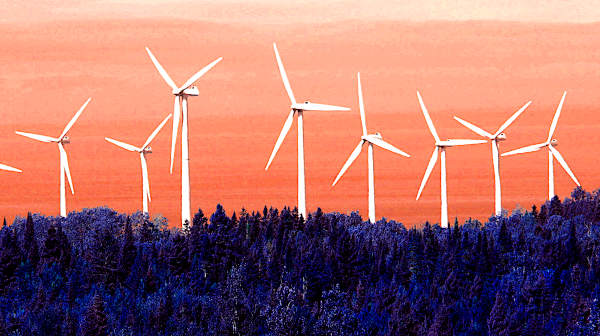
The cleanest electricity comes from the wind and the sun, but it takes time to build enough solar power plants and wind turbines for a whole country. Then there is another big problem; we cannot depend on solar power and the wind, because the sun does not shine at night, and the wind does not blow all the time. These kinds of green power are not reliabledependable, so we need other ideas too.
Climate change is mostly caused by CO2carbon dioxide, a greenhouse gas and other gases in the air. Many countries are now producing less CO2 and less air pollution than they used to. Cars are cleaner, heating is cleaner, more things are being recycled. The problem lies in poorer countries which cannot affordhave enough money for the new technology, and do not have the systems in place; it also lies in countries like China or Poland or Greece, where coal is still a vital source of energy, of jobs or of exports.
Some people believe that we cannot afford to fight climate change because it will cost too much. The truth is that we cannot afford not to fight against climate change, because the cost of a climate catastrophe will be even higher .
Return to Linguapress site index
Printing: Optimized for printing
Copyright © Linguapress. Do not copy this document to any other website
Student Worksheet
Climate change: can we stop it ?
Interactive - use on screen or on paper:Complete this extract from the original text, choosing the correct word from the three options suggested in each case.
The electricity comes from the wind and the sun, but it takes time solar power plants and wind turbines for country. Then there is another big problem; we cannot solar power and the wind, because the sun shine at night, and the wind blow all the time. These kinds of green power are not , so we need other ideas .
Some people believe that we afford to fight climate change because it will cost much. The truth is that we afford not to fight against climate change, because the cost of a climate catastrophe will be higher .
Relative pronouns: who, which and that.
Choose the relative pronoun that was used in the original article: note that that often replaces which, when referring to things. That can also refer to people, but this is less common.
"Going green" will ... use some kinds of technology do not yet exist."
"All the energy we use may perhaps come from renewable sources..."
"There are other people have different priorities..."
"There are people and big companies just want to make money..."
"...and are not interested in anything gets in their way."
"The problem lies in poorer countries cannot afford the new technology..."
For
teachers:
Grammar
Modal verbs. This text is rich in modal verbs; these are highlighted in deep blue. When teaching about modal verbs, it is best to use the broad semantic definition of what modal verbs are, not the narrow linguistic definition. Thus modal verbs are " helper verbs which affect the meaning of a main verb, by adding a quality to the action, most commonly possibility, probability, obligation or recommendation, or futurity" (see Modal verbs in the Linguapress Descriptive Grammar of English), and the list of such modal verbs includes not just can, must and others, but also be able to, have to, need to and some more.Note in particular the less common forms that are illustrated in this article, need not and will have to. Remind students that most modal verbs are never followed by to, but a small number (ought to, have to, be able to) are always used with to. Need is a special case (See Descriptive Grammar of English §1.15.2.)
Adverbs still , already and not yet.
Note how these three commonly confused adverbs are used in the same paragraph.
Defining
Relative Clauses
Defining
relative clauses specify exactly which person, country, or thing is
concerned. Without them, the sentence would be incomplete or lose
its meaning.
"There are still some people who say that climate change is not
real!"
"Others
who say that it is real..."
"...and use some kinds of technology that do not yet exist."
"...all the energy that
we use may perhaps come from renewable sources..."
"...there are other people who have different priorities..."
"...there are people who just don't care..."
"...there are people who care more about themselves..."
"There are people and big companies that just want to make money..."
"...and are not interested in anything that gets in their way."
"...politicians who
are frightened of doing anything..."
"...doing anything that
other people will not like..."
"The problem lies in poorer countries which cannot afford the new
technology..."
Contrast these with the non defining relative clauses...
Non-defining clauses provide extra, descriptive information about something already clearly identified. In writing, they are usually separated by commas (or brackets). The sentence remains understandable even if these non-defining clauses are removed"...countries like China or Poland or Greece, where coal is still a vital source of energy..." (Using the relative adverb "where" to add extra details about these specific countries).
More
teaching ideas
Creative writing:
Using information from the article, and any other information that pupils may have, ask them to write down four sentences starting:If we want to stop climate change, we must .......
And four sentences starting:
If we want to stop climate change, we cannot / must not .......
Interactive gap-fill exercise above.
This exercise can be taken in many different ways. One good way, if your classroom is suitably equipped, is to project the exercise onto the whiteboard and ask students to write down 24 answers in order on a sheet of paper. Then, one by one, click on the options so that pupils can correct or change their answers. Finally explain the right answers which are in the original text.
This exercise is best done if you make sure that students can no longer see the original text.
Some teachers however may simply ask pupils to refer back to the original text to find the right answers.
The different gaps to fill cover a variety of aspects of English - vocabulary, structures, collocations.
Vocabulary: pay attention to some useful expressions in this article, which students should learn. can afford (the verb afford is always preceeded by can), to make a promise and to keep a promise, to care about something and to not care about something.
If students don't understand the word renewable, break it down into its constituent parts: re (=again) new (=new) -able (can be), so renewable energy is energy that can be new again.
Going further – For some general tips on the nature of technical language, and discover more graded Englih texts on technical topics, see Technical English
Other ideas?
EFL teachers: Help develop this resource by contributing extra teaching materials or exercises.
To contribute click here for further details
This teaching resource is © copyright Linguapress 2023 - 2026
Republication on other websites or in print is not authorised
| Linguapress; home | Découvrez l'Angleterre (en français) | Discover Britain |