
English for advanced learners
The silence of Anne-Marie - a short story
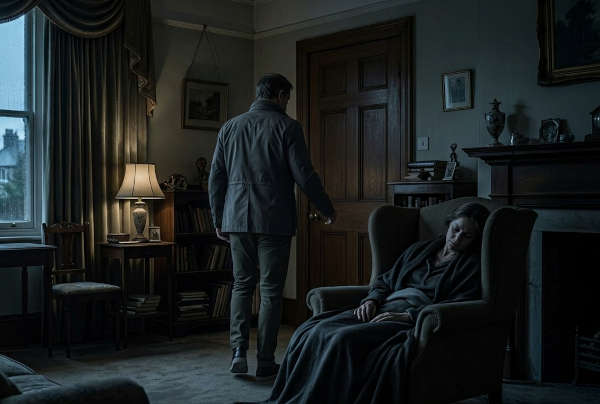
Matthew came into the large, dimly lit living-room with the air of a man who wants to apologise for something, but hopes that he may put off doing so until a more suitable moment. Anne-Marie was reclining in the big armchair by the fireplace, wrapped in the half-darkness and an attitude of uncompromising silence.
"It's me," he began, "It's started raining again."
Anne Marie made no sign of having heard the meteorological news.
"I met Bill in town today," Matthew continued. "And he invited us over for a drink tomorrow!"
The silence in the living-room remained unbroken, except for the noise of the rain outside.
Matthew walked over to the window and looked out into the gatheringdeepening, growing dusktwilight, evening dark.
"It really is extraordinary weather for this time of year," he remarked.
Still his wife showed no interest. Her silence was not passive; it was dynamic, aggressive, like the silence of a cloud loaded with thunder. Matthew felt that a crisis of some sort was coming, and he bracedprepared, steeled himself to face it.
"Look here, love," he said, turning round and advancing towards her chair, "I know you're annoyed about that business with the lawyer. I admit I was in the wrong – at least, I shouldn't have shouted at him. But really, when someone comes and practically tells you that you don't know how to run your life, it's enough to make anyone lose their temper. But I'm sorry I said what I did to him. I'll write and apologise if you like."
He paused, waiting for some response, but his wife still sat motionless, her eyes fixed on the empty air in front of her.
"After all," Matthew went on, "it's no good getting upsetunhappy, bothered by something like that. We've got to live with it, and we might as well make the best of it. Don't you think so?"
Anne-Marie remained monumentally indifferentunconcerned, unresponsive.
"I've told you I'm sorry," he went on, a note of irritation creeping into his voice. "I don't see what more I can say. You've been sitting there in the dumpsfeeling sad or gloomy all the afternoon. It's ridiculous to make such a fussunnecessary commotion over a trifleminor detail, small thing."
He walked up and down the room, waiting for the storm to break. But the silence continued, dense and ominousthreatening bad things.
"Well," he said at last, moving towards the door, "if you're determined to stay in a sulkbad mood, silent anger, I suppose I can't stop you. I'm going upstairs to write some letters."
He paused for a moment at the door, hoping for a word, or even a hostile gesture, that would break the unbearable tension. Anne-Marie neither moved nor spoke.
With a shrugshoulder raise (showing indifference) of his shoulders, Matthew went out and closed the door behind him.
When he had gone, a large grey cat crept out from under the sofa, stretched itself luxuriously, and jumped onto Anne-Marie's lap. It sniffed at her limpsoft, lifeless, motionless hands, curled itself into a ball, and went to sleep.
Sadly, Anne-Marie had died two hours earlier.
Discover more short stories from Linguapress
Copyright © Linguapress. Do not copy this document to any other website
Copying permitted for personal study, or by teachers for use with their students
STUDENTS' WORKSHEET
Short story: The Silence of Anne-Marie
Comprehension questions.
2) Where was Matthew earlier in the day, and who did he meet?
3) What did Matthew do during his argument with the lawyer?
4) How does Matthew propose making up for his argument with the lawyer?
5) What did the cat do after Matthew left the room?
6) Based on evidence in the text, who is Matthew?
2. Words and word endings
Here is an extract from the story, the endings of many words have been omitted, and some words have been omitted completely. Choose the correct option in each case.Matthew came into the large, dim lit living-room with the air of a man who wants to apolog for some , but hopes that he may put off do so until a more suit moment. Anne-Marie was reclin in the big armchair by the fireplace, wrapp in the half-dark and an attitude of uncompromis silence.
"It's me," he began, "It's start raining again."
Anne Marie made no sign of hav heard the meteorolog news.
"I met Bill in town today," Matthew continued, "and he invited us to come over for a tomorrow."
The silence in the living-room remained unbr , except for the noise of the rain outside.
....
"It really is extraordin weather for this time of year," he remarked.
Still his wife showed interest. Her silence was not pass ; it was dynamic, aggress , like the silence of a cloud loaded with thunder. Matthew fe that a crisis of sort was coming, and he braced himself to face it.
3. Text contraction / précis writing
With just 500 words, this story is very short and condensed, as it is. But it could be shorter. Contract the story to no more than 150 words, starting with "Anne-Marie was reclining in her armchair when..."Teacher tips
Background
Saki was a very popular English short story writer a hundred years ago. His stories are often used in schoolrooms and classes, generally in the original text. However society and the English language have both changed quite a bit over the past hundred years, so Linguapress has slightly updated this story to reflect modern times, replacing dated vocabulary and verbosity that are not in keeping with modern writing. That being said, the text is essentially by Saki, while the context has been modernized. Saki's original characters were called Edgar and Lady Ann.
Grammar
The text clearly illustrates these two key grammar points:1. Perfect tenses for prior actions & retrospective context
The story makes heavy use of the present perfect for recent events relevant to the present, the past perfect for sequencing events in the past, and a dramatic past perfect in the final line that alters the narrative timeframe.Present Perfect in direct speech: Used by Matthew to bring past events into his current attempt to apologize.
"It's started raining again."
"I've told you I'm sorry..."
"You've been sitting there..." (Present perfect continuous)
Past Perfect in Narrative: Used to sequence events
"When he had gone, a large grey cat crept out..."
"Sadly, Anne-Marie had died two hours earlier." (The twist at the end uses the past perfect to show her death occurred prior to the entire conversation).
2. Participle phrases & adverbial modifiers
The narrative relies frequently on present participle (-ing) and past participle (-ed) clauses to describe simultaneous actions, movement, and emotional states without repeating simple subject-verb structures. Note that these examples are participles, not gerunds.Present Participles (-ing):
"...He paused, waiting for some response, "
"...turning round and advancing towards her chair..."
"...a note of irritation creeping into his voice."
"...hoping for a word, or even a hostile gesture..."
(For cross reference: there are two examples of -ing forms used in the story as gerunds.
"... hopes that he may put off offering it "
unhappy, bothered "... it's no good getting upset")
Past Participles (-ed):
" wrapped in the half-darkness and an attitude of uncompromising silence."
"...her eyes fixed on the empty air in front of her."
"...determined to stay in a sulk..." (past participle as predicative adjective)
Other ideas?
EFL teachers: Help develop this resource by contributing extra teaching materials or exercises.
Click here for further details
Reading comprehension in the English class
(Version française : Petite méthodologie de la compréhension écrite )
© linguapress.com



 Copyright
information.
Copyright
information.