
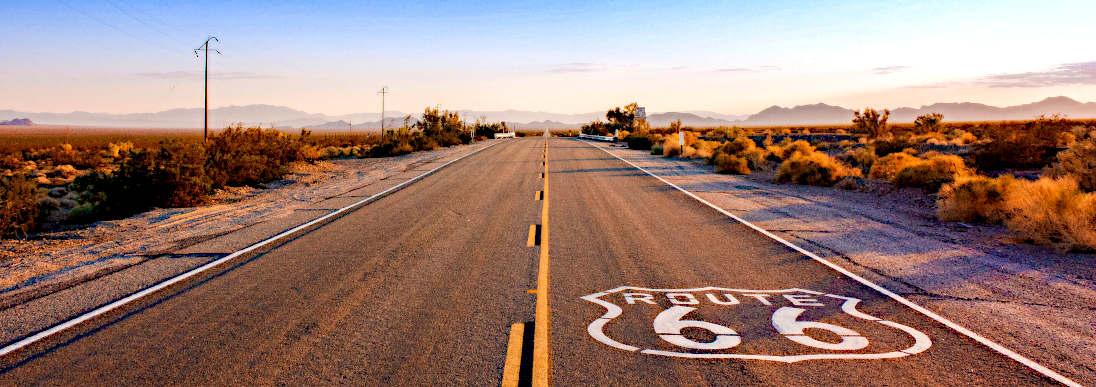
Route 66: the "Mother Road"
Linguapress Elementary
Linguapress Elementary
English
Discover historic Route 66, the most famous highway in the USA
Words in purple
that turn red: click for
instant vocabulary explanation
Life on the Mother Road
The author John Steinbeck, who knew Route 66, called it the "Mother Road." For many thousands of families, this road was a path to a better life. During the 1930s, many people wanted to escape from the "dust is fine powder in the air Bowl" – a part of the middle of America that was very dry and dusty. They wanted a better life in California, where the sun was warm and the land was good.
The journey was never easy. In the early days, most of the road was just dirt or gravel. Cars often broke down, and there was no air conditioning to help when the desert sun became hot. Because the trip was so hard, many small service stations, friendly restaurants , and cozy motels appeared along the route. People needed to stop for food, sleep, and car to repair means to mend
 In
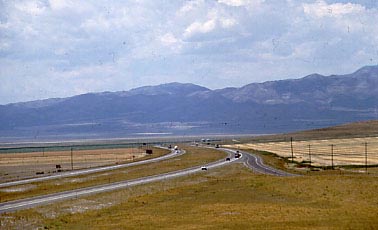
the 1950s and 1960s, the national
government built new, faster highways called "interstates."
These were much straighter, wider, and faster than the old
Route 66. Because of this, people stopped using the old road, and in
1977, Route 66 officially closed. When the road closed, business in
many small towns along the route disappeared.
Some small towns disappeared completely. Today, you can sometimes see
old, empty buildings – the ghosts of hotels and gas stations – standing
alone in the middle of nowhere.
In
the 1950s and 1960s, the national
government built new, faster highways called "interstates."
These were much straighter, wider, and faster than the old
Route 66. Because of this, people stopped using the old road, and in
1977, Route 66 officially closed. When the road closed, business in
many small towns along the route disappeared.
Some small towns disappeared completely. Today, you can sometimes see
old, empty buildings – the ghosts of hotels and gas stations – standing
alone in the middle of nowhere.
A Modern Adventure
Today, a few tourists still drive on the parts of the old road that remain. They want to see the history and feel the spirit of the past. It is not an easy trip, but for those who drive it, Route 66 is still a powerful symbol of the American spirit and the history of the open road.
Not many tourists travel the whole road, or what is left of it. Even in an air-conditioned Cadillac, Route 66 remains – in the words of Woody Guthrie – "a mighty hard road."
no longer : not any more - giant: very big - unite: join (as in United States) - dusty: covered in dust, a find powder in the air - repair: to mend - diner: a restaurant - federal; national - collapsed: disappeared
Audio: note the pronunciation of the word "route": in American English there are two pronunciations, [raut] (rhyming with out) or [rut] rhyming with boot. In British English, the word is always pronounced [rut], like root.
Discover a longer C1 level version of this text: Highway 66 revisited
Copyright notice.
This resource is © copyright Linguapress - Simplified from an article originally published in Spectrum magazine.
This text may not be reproduced on other websites nor in printed form without written permission from the publishers. Reproduction is authorised exclusively for personal use by students, or for use by teachers with their classes.
Exercises:
Exercise 1: Identifying Information (True / False)
Read the statements below and write TRUE if the statement agrees with the text, or FALSE if the statement contradicts the text or is not given) .
1. Cyrus Avery was the only person who worked on the road.
2. Route 66 was more than 2,000 miles long.
3. In the 1930s, many families moved to California because the climate was better.
4. The first roads were made of smooth concrete.
5. There are more diners on Route 66 today than in the past.
Exercise 2: Sentence Completion
Complete the sentences below. Choose between one and three words from the text for each answer.
1. In 1926, Cyrus Avery wanted to build a highway to connect the middle of the USA to the
2. John Steinbeck gave Route 66 the famous nickname
3. Because the journey was difficult, many small and motels opened along the road.
4. In the 1950s and 1960s, the government built that were much faster than Route 66.
5. Today, some tourists still drive on the road to see the of the United States.
Exercise 3: Vocabulary Matching
Match the words from the text (1-5) with their correct definitions (A-E).
Use of the simple past tense (with regular and irregular verbs)
The narrative relies on the simple past tense to narrate historical events.
Regular verbs: wanted / helped / appeared / collapsed / disappeared
Irregular verbs: began / built / knew / became / broke down
Modal verb need .
The verb need appears three times in the text:
most Americans need a car / cars need roads / People needed to stop.
Make sure that students can transform these three statements into questions, and express them in the negative too.
For example: Do most Americans need a car / Most Americans do not need a car a.
Now work on similar expressions : We need a rest / We need to work faster / This machine needs mending .
Prepositions
This text is rich in prepositions, notably basic single-word prepositions like in of or to, but also compound prepositions such as as far as / in front of / in the middle of
 In the USA, the car is a part
of daily life. To go anywhere, even to the shops, most Americans need a
car. However, cars need roads, and some roads are more
interesting than others. There are lots of famous roads in the USA, but
one road is special: Route
66. Although it is not any more part
of
the network today, it has a place in the history and the culture of the
United States
In the USA, the car is a part
of daily life. To go anywhere, even to the shops, most Americans need a
car. However, cars need roads, and some roads are more
interesting than others. There are lots of famous roads in the USA, but
one road is special: Route
66. Although it is not any more part
of
the network today, it has a place in the history and the culture of the
United States
A New Road
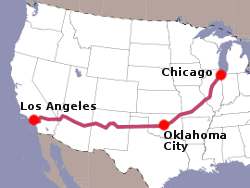
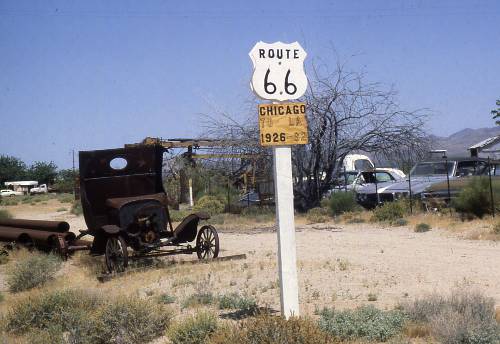
The story began in 1926. A businessman called Cyrus Avery wanted to build a long highway connecting the middle of the country to the West Coast. People liked his plan, and soon a new road was built from Chicago, Illinois, as far as Los Angeles, California. The road was more than 2,000 miles long. It was a enormous, very big project that helped bring together the country.Life on the Mother Road
The author John Steinbeck, who knew Route 66, called it the "Mother Road." For many thousands of families, this road was a path to a better life. During the 1930s, many people wanted to escape from the "dust is fine powder in the air Bowl" – a part of the middle of America that was very dry and dusty. They wanted a better life in California, where the sun was warm and the land was good.
The journey was never easy. In the early days, most of the road was just dirt or gravel. Cars often broke down, and there was no air conditioning to help when the desert sun became hot. Because the trip was so hard, many small service stations, friendly restaurants , and cozy motels appeared along the route. People needed to stop for food, sleep, and car to repair means to mend
Music and Memory
The road even became a star in music. There is a very famous song simply called "Route 66." Many great artists, like Nat King Cole and the Rolling Stones, have recorded this song, that tells the story of the long drive from "Chicago to L.A.".The End of the Road
In
the 1950s and 1960s, the national
government built new, faster highways called "interstates."
These were much straighter, wider, and faster than the old
Route 66. Because of this, people stopped using the old road, and in
1977, Route 66 officially closed. When the road closed, business in
many small towns along the route disappeared.
Some small towns disappeared completely. Today, you can sometimes see
old, empty buildings – the ghosts of hotels and gas stations – standing
alone in the middle of nowhere.A Modern Adventure
Today, a few tourists still drive on the parts of the old road that remain. They want to see the history and feel the spirit of the past. It is not an easy trip, but for those who drive it, Route 66 is still a powerful symbol of the American spirit and the history of the open road.
Not many tourists travel the whole road, or what is left of it. Even in an air-conditioned Cadillac, Route 66 remains – in the words of Woody Guthrie – "a mighty hard road."
To travel Route 66 from end to end, travelers
should allow at least a week. For an interactive map of the historic
route, see Route 66 map on
About-the-USA.com.
Route 66 is a road for people with time to spare, and a taste for a long journey. Scottish TV presenter Billy Connolly spent weeks travelling the route for a four-part TV documentary;
Route 66 is a road for people with time to spare, and a taste for a long journey. Scottish TV presenter Billy Connolly spent weeks travelling the route for a four-part TV documentary;
CLEAR, CONCISE
and COMPREHENSIVE
Discover grammar in a new light
"A breath of fresh air" - IATEFL Voices
Print & ebook from Amazon,
Print book from Barnes & Noble, Waterstones & other good bookshops
Difficult
words: (you can also click words in the text to see their
meaning)Discover grammar in a new light
"A breath of fresh air" - IATEFL Voices
Print & ebook from Amazon,
Print book from Barnes & Noble, Waterstones & other good bookshops
no longer : not any more - giant: very big - unite: join (as in United States) - dusty: covered in dust, a find powder in the air - repair: to mend - diner: a restaurant - federal; national - collapsed: disappeared
Audio: note the pronunciation of the word "route": in American English there are two pronunciations, [raut] (rhyming with out) or [rut] rhyming with boot. In British English, the word is always pronounced [rut], like root.
Discover a longer C1 level version of this text: Highway 66 revisited
Return to
Linguapress site index
► More American history texts: Gettysburg (Advanced) - Ellis Island (Advanced) - Martin Luther King (Advanced) - Rosa Parks (Advanced) - Thanksgiving (Advanced) - Buffalo Bill (Intermediate)
► More American history texts: Gettysburg (Advanced) - Ellis Island (Advanced) - Martin Luther King (Advanced) - Rosa Parks (Advanced) - Thanksgiving (Advanced) - Buffalo Bill (Intermediate)
Copyright notice.
This resource is © copyright Linguapress - Simplified from an article originally published in Spectrum magazine.
This text may not be reproduced on other websites nor in printed form without written permission from the publishers. Reproduction is authorised exclusively for personal use by students, or for use by teachers with their classes.
Student worksheet
Highway 66 revisited
Exercises:
Exercise 1: Identifying Information (True / False)
Read the statements below and write TRUE if the statement agrees with the text, or FALSE if the statement contradicts the text or is not given) .
1. Cyrus Avery was the only person who worked on the road.
2. Route 66 was more than 2,000 miles long.
3. In the 1930s, many families moved to California because the climate was better.
4. The first roads were made of smooth concrete.
5. There are more diners on Route 66 today than in the past.
Exercise 2: Sentence Completion
Complete the sentences below. Choose between one and three words from the text for each answer.
1. In 1926, Cyrus Avery wanted to build a highway to connect the middle of the USA to the
2. John Steinbeck gave Route 66 the famous nickname
3. Because the journey was difficult, many small and motels opened along the road.
4. In the 1950s and 1960s, the government built that were much faster than Route 66.
5. Today, some tourists still drive on the road to see the of the United States.
Exercise 3: Vocabulary Matching
Match the words from the text (1-5) with their correct definitions (A-E).
| Word 1. Highway 2. Connect 3. Collapse 4. Remain 5. Symbol |
Definition A. To break or fail suddenly (like a business). B. A very large, main road for traveling long distances. C. To join two or more things together. D. Something that represents a bigger idea or feeling. E. To stay or be left after other parts are gone. |
For teachers:
GrammarUse of the simple past tense (with regular and irregular verbs)
The narrative relies on the simple past tense to narrate historical events.
Regular verbs: wanted / helped / appeared / collapsed / disappeared
Irregular verbs: began / built / knew / became / broke down
Modal verb need .
The verb need appears three times in the text:
most Americans need a car / cars need roads / People needed to stop.
Make sure that students can transform these three statements into questions, and express them in the negative too.
For example: Do most Americans need a car / Most Americans do not need a car a.
Now work on similar expressions : We need a rest / We need to work faster / This machine needs mending .
Prepositions
This text is rich in prepositions, notably basic single-word prepositions like in of or to, but also compound prepositions such as as far as / in front of / in the middle of
 Copyright
information.
Copyright
information.